
Trump’s One Big Beautiful Bill Act as the Architecture of Domestic Repression: A People(s)-Centered Human Rights Critique
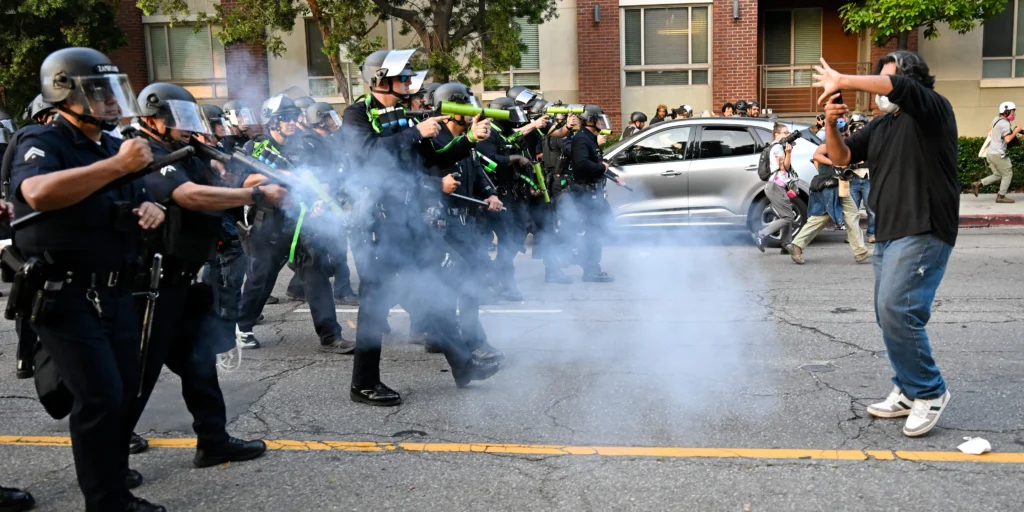
The so-called “One Big Beautiful Bill ” (OBBBA), the first major signature piece of legislation of the Trump administration, was signed into law by President Donald Trump on July 4, 2025. Marketed with the usual populist bravado, the bill was in fact a sweeping and reactionary package that advanced tax cuts for capital while imposing draconian changes to healthcare funding, including rollbacks of Affordable Care Act subsidies and deep cuts to Medicaid.
Beyond healthcare, however, the OBBBA codified a broader and more dangerous trajectory: the continued erosion of state obligations to uphold fundamental human rights norms rooted in both domestic and international law. Nowhere is this retreat more evident than in the provisions targeting migrant workers and their families. These measures reflect an intensification of the racialized logic of exclusion that has long structured U.S. governance—transforming immigration enforcement into an openly punitive regime that treats migrants not as rights-bearing human beings but as disposable labor and permanent threats to the settler state’s political imagination.
From a people(s)-centered human rights perspective, the One Big Beautiful Bill Act (OBBBA) should not be understood primarily as a fiscal or administrative reform. It should be understood as a repressive restructuring of state power that subordinates human needs to security logics, criminalizes survival, and weaponizes precarity — particularly against migrants and their families.
The People(s)-Centered Human Rights framework rejects the narrow, state-centric notion of rights as abstract legal entitlements and instead centers the material conditions necessary for human dignity, collective survival, and social reproduction. From this perspective, rights are not gifts from states but social guarantees rooted in the dignity and objective needs of individuals, peoples and communities. The OBBBA represents a direct assault on those guarantees.
1. Health as a Human Right vs. Health as a Tool of Control
The OBBBA’s restrictions on Medicaid, Medicare, and Affordable Care Act access for undocumented migrants and some legal immigrants transform healthcare from a universal human right into a disciplinary mechanism.
Under the Universal Declaration of Human Rights (Article 25), everyone has the right to a standard of living adequate for health and well-being, including medical care. The International Convention on the Rights of Migrants and their Families (Articles 28 and 43) affirms migrants’ rights to emergency medical care and equal access to social services, while the Convention on the Rights of the Child (CRC) (Article 24) establishes children’s right to the highest attainable standard of health — regardless of status.
By excluding migrants from healthcare systems, the state is not simply saving money; it is producing vulnerability and denying the most basic of human rights. This manufactured vulnerability disciplines migrant labor, suppresses resistance, and enforces silence. When people fear medical systems, they delay treatment, avoid hospitals, and risk death rather than risk deportation. Illness becomes a mechanism of control.
This violates the people(s)-centered principle that social institutions should exist to sustain life, not manage it through suffering and fear.
2. Fear as a Governing Technology
The OBBBA does not merely restrict benefits; it generates fear. Migrants increasingly avoid schools, clinics, social workers, and even emergency services due to fear of surveillance, data-sharing, or exposure to immigration enforcement. This fear spills beyond migrants themselves and fractures entire communities. With the unleashing of ICE by the Trump Administration reports are circulating on the increasing numbers of undocumented migrants who are afraid to report to work sites, shop for food or even send their children to school.
The CRC (Article 28) guarantees children’s right to education. Yet when parents fear deportation, children stop attending school. The UDHR (Articles 22 and 26) affirms rights to social security and education, but those rights are hollow when accessing them risks family separation.
From a people(s)-centered lens, fear itself is a form of violence. It is a slow, cumulative harm that restructures behavior, isolates communities, and erodes trust. The OBBBA thus governs not only through law but through psychological coercion, transforming everyday life into a field of surveillance and risk.
3. Criminalization of Survival
The OBBBA expands enforcement while shrinking support. This produces what could only be understood as the criminalization of existence: people are punished not for crimes but for living while poor, undocumented, racialized, or politically disposable.
Work becomes dangerous. Seeking medical care becomes dangerous. Sending children to school becomes dangerous. This violates the ICRMW’s core principle that migrants are workers and social beings with non-negotiable human rights.
4. The Racialized Structure of Repression
Although framed as neutral policy, the OBBBA functions within a racialized political economy. Migrants targeted by its provisions are overwhelmingly from the Global South, Indigenous, Black, or Brown. The withdrawal of social protections follows the same colonial logic that governs U.S. foreign policy: discipline peripheral populations while securing the comfort of the core. That is why domestic repression and foreign imperialism are not separate phenomena. The OBBBA mirrors sanctions regimes abroad: deny resources, create crisis, and justify social control.
5. Collective Harm, Not Individual Misfortune
A people(s)-centered framework rejects the liberal tendency to see suffering as individual failure. The OBBBA continues the legacy of systemic oppression and non-recognition of human rights in U.S. law and practice that produces systemic harm:
- Children grow up unhealthy, undereducated, and traumatized.
- Families fracture under fear and poverty.
- Communities retreat from public life.
- Public health deteriorates for everyone.
This violates not only individual rights but collective social integrity — the foundation of human flourishing.
6. The Moral Inversion of the State
In the people(s)-centered framework, the state’s legitimacy rests on its capacity to protect life, dignity, and social reproduction. The OBBBA reverses that function. It uses state power to withhold care, generate insecurity, and normalize exclusion.
This is not policy failure. It is political design.
Conclusion
The One Big Beautiful Bill Act is not simply anti-immigrant policy; it is an institutionalization of governance through deprivation. It replaces social rights with security logics, transforms healthcare and education into tools of discipline, and governs oppressed and marginalized populations through fear.
From the standpoint of people(s)-centered human rights, the OBBBA represents a fundamental violation of the principles articulated in the UDHR, ICRMW, and CRC — not only in legal terms but in moral and social ones. It denies that migrants and their families are part of the human community entitled to dignity, care, and collective belonging.
In doing so, it reveals a deeper truth: the bill is less about immigration than about what kind of society the U.S. is becoming — one in which repression replaces solidarity, control replaces care, and law becomes a weapon rather than a shield.
That is why the struggle against the OBBBA is not only a migrant justice issue. It is a struggle over the meaning of rights, the purpose of the state, and whether human life is treated as a value or as a variable to be managed.