
North-South Project for People(s)-Centered Human Rights
Director: Ajamu Baraka
Decolonizing Human Rights for Human Liberation
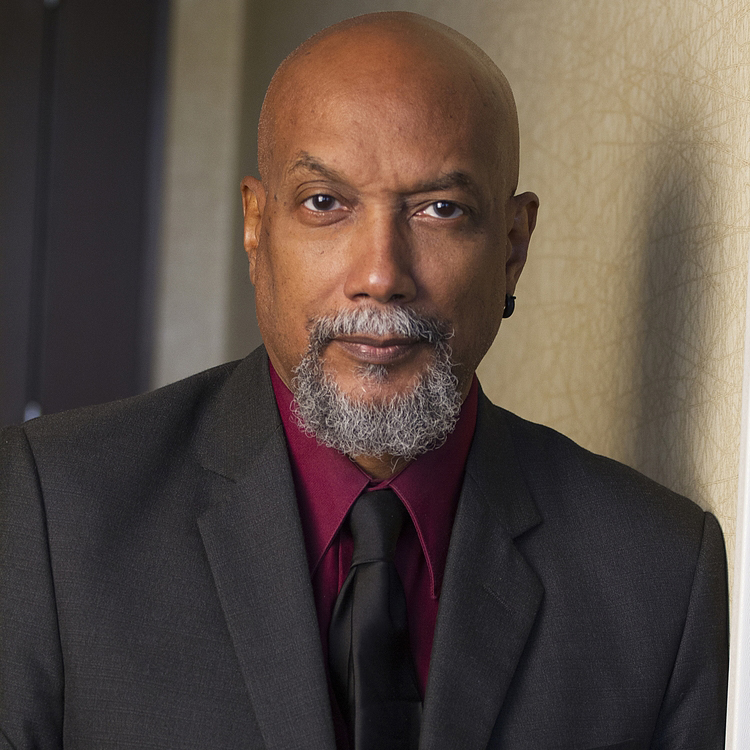
Ajamu Baraka is a geopolitical analyst, organizer, writer, human rights defender, and veteran of
the U.S. Black Liberation Movement with over 53 years of work in the U.S. and internationally.
Baraka is the founder of the Black Alliance for Peace (BAP) and Chair of its’ Coordinating
Committee. Recently Baraka co-founded the International Coalition to Stop Genocide in Gaza to
support the South African case filed with the International Court of Justice. In 2016 Baraka was
a candidate for Vice President of the United States on the Green Party ticket. He currently serves
on the Executive Committee of the U.S. Peace Council and the leadership body of the United
National Anti-War Coalition (UNAC). He is an editor and contributing columnist for the Black
Agenda Report and the recipient of the Serena Shirm award for uncompromised integrity in
journalism. In 2019 Baraka was awarded the US Peace Memorial’s Peace Prize.
Mission of North-South Project for People(s)-Centered Human Rights:
The North-South Project for People(s)-Centered Human Rights (the “Project”) will contribute
to the building of an alternative human rights frame that is liberated from the liberal, individual,
legalistic, and state-centered apparatus that emerged at the conclusion of World War II as a
“Western” human rights regime that became, and continues to be, a conservative weapon for
enforcing the geopolitical interests of Western imperialism. The Western supported genocide in
Gaza and the continued annexation of the Occupied West Bank has sharpened the
irreconcilable contradictions of the Western human rights project resulting in the crisis of
legitimacy that it is now experiencing. By rejecting the ideological mystification of a neutral and
objective human rights framework, the Project, through educational activities, building
transnational cooperative structures and supporting popular struggles, will link oppressed
communities, classes and “peoples” from the Global North and South that are moving toward
developing movements committed to national and global anti-capitalist, de-colonial and anti-
imperialist struggles for social justice, ecological sustainability, national liberation and authentic
self-determination.
Objectives:
Phase one:
1) Develop through a webinar series, website, newsletters, virtual and in person
trainings, and research support, a North-South dialogical process that will
introduce and reinforce PCHRs as an ethical framework that defines and centers
as human rights, the material, cultural and social needs and aspirations of de-
colonizing peoples, nations and oppressed classes engaged in concrete mass
opposition.
2) Serve as a repository for compiling and disseminating information on human
rights issues and struggles of African and other nationally oppressed peoples
and classes, with a special focus on African peoples in the Americas and migrant
African peoples in the areas of the Global North from the U.S. to across Europe.
3) Build specific institutional relationships with partner organizations in the
Americas, Europe and Africa.
4) Integrate the PCHRs frame and counter-narrative into the ongoing work of the
Black Alliance for Peace’s campaigns and programmatic work, such as the
domestic “No Compromise, No Retreat campaign,” the American-wide Zone of
Peace campaign, and the “Shut Down the U.S. Africa Command” work and
BAP’s other anti-war and anti-imperialist work.
Why the Link between the global North and South?
The United States settler state was established by the violent theft of Indigenous land
through conquest and the importation of enslaved Africans who were forced to provide
free labor using systematic, unspeakable physical violence such as lynching, rape, race
riots, torture and murders by police forces.
These forms of violence constituted the method by which structures of settler
colonialism, white supremacy and racial capitalism were established, reproduced and
thrived, and are the methods by which the U.S. capitalist state maintains its dominance
globally using military interventions to control the labor, land and mineral wealth of the
vast majority of the world’s peoples.
Why People(s)-Centered Human Rights
Despite what proponents of human rights proclaim, the human rights idea is not
innocent. The notion of human rights emerged as an aspect of classical liberalism at a
particular historical moment in Europe informed by the internal class/social struggles
and the colonialist expansion of various European powers.
While classical European liberalism professed a fidelity to the “rights of man” and the
proclamation that all “men” are equal, it simultaneously provided philosophical justifications for
slavery, genocide, settler colonialism, capitalism, patriarchy and imperialism – systems that
degrade, dominate, destroy, and systemically oppress human subjects.
The systematic degradation, dehumanization and murder of Palestinians with the full support of
the “collective West,” is a graphic example the moral dualism of the white supremacist Western
project.
How has liberalism been able to achieve this? Because at the heart of the liberal project are
exclusionary criteria for who deserves to have rights, that tragically for millions of people during
the last 500 years of European dominance, rest on a stratification of humanity in which
Europeans and their civilizational project is at the apex. It is that internal moral contradiction that
explains how Thomas Jefferson could speak of fundamental equality while holding slaves and
raping Black women; how Winston Churchill could call for self-determination of nations while
maintaining a colonial empire; how U.S. authorities can justify kidnapping and assassination
even of U.S. citizens and the invasions of States, all in the name of fighting Islamic terrorists;
and how war can be employed in the name of “humanitarian intervention” and the “responsibility
to protect” but is ignored when Palestinians face a racist genocide.
Therefore, for social justice activists around the world, but particularly in the global South, it was
precisely these moral contradictions by both Western and non-Western states that created deep
dissatisfaction and mistrust of human rights as an instrument for radical social change. It appears
to many of these activists that the orthodox framework is not able to offer any more than bland
reforms and a depoliticized politics.
In response to the human rights crisis of relevance, a “people(s)-centered human rights”
(PCHRs) concept and approach has been developing from the margins of the U.S. human rights
movement over the last few years. Introduced in 2004 by Ajamu Baraka, human rights activist
and co-founder of the Black Alliance for Peace, the PCHRS framework is informed by the
African American radical human rights tradition and recognizes the contingent and contested
nature of human rights framework. The modern expression of PCHRs developed out of the
organizing and agitation directed at the newly formed United Nations between 1945 and 1951
and subsequently taken up by figures like Malcolm X and elements of the radical Black anti-
colonial, revolutionary movements in the 1960s. This tradition of human rights struggle
combined the struggle against white supremacy and anti-colonialism with a commitment to
domestic and global systemic transformation. As a political project historically and socially
grounded in the needs and realities of oppressed communities and peoples and committed to
social justice and the development of the people as autonomous political subjects, it rejects the
mystification of the supposedly non-political, universalist perspective and practice of human
rights.
There was something quite different with Malcolm’s approach to human rights that distinguished
him from mainstream civil rights activists. By grounding himself in the radical human rights
approach, Malcolm articulated a position on human rights struggle that did not contain itself to
just advocacy. He understood that appealing to the same powers that were responsible for the
structures of oppression was a dead end. Those kinds of unwise and potentially reactionary
appeals would never result in substantial structural changes. Malcolm understood oppressed
peoples must commit themselves to radical political struggle in order to advance a dignified
approach to human rights.
“We have to make the world see that the problem that we’re confronted with is a problem for
humanity. It’s not a Negro problem; it’s not an American problem. You and I have to make it a
world problem, make the world aware that there’ll be no peace on this earth as long as our
human rights are being violated in America.”
And if the U.S. and the international community does not address the human rights plight of the
African American, Malcolm is clear on the course of action: “If we can’t be recognized and
respected as a human being, we have to create a situation where no human being will enjoy life,
liberty, and the pursuit of happiness.”
Malcolm’s approach to the realization of human rights was one in which human agency is at the
center. If oppressed individuals are not willing to fight for their human rights, Malcolm
suggested that “you should be kept in the cotton patch where you’re not a human being.”
If you are not ready to pay the price required to experience full dignity as a person and as
members of a self-determinant people, then you will be consigned to the “zone of non-being,” as
Fanon refers to that place where the non-European is assigned. Malcolm referred to that zone as
a place where one is a sub-human:
“You’re an animal that belongs in the cotton patch like a horse and a cow, or a chicken or a
possum, if you’re not ready to pay the price that is necessary to be paid for recognition and
respect as a human being.
“And what is that price?
“The price to make others respect your human rights is death. You have to be ready to die… it’s
time for you and me now to let the world know how peaceful we are, how well-meaning we are,
how law-abiding we wish to be. But at the same time, we have to let the same world know we’ll
blow their world sky-high if we’re not respected and recognized and treated the same as other
human beings are treated.”
In the contemporary period, PCHRs advocates continue that approach but with an even more
explicit focus on naming the main enemy of human rights – the Pan European White
Supremacist, Colonial/capitalist patriarchy.
What is the definition of People(s)-Centered Human Rights?
People(s)-Centered Human Rights (PCHR) are those non-oppressive rights that reflect the
highest commitment to universal human dignity and social justice that individuals and
collectives define and secure for themselves and Collective Humanity through social struggle.
This definition is a description of a process and an ethical framework as opposed to a
pre-figured list of items defined as representing human rights. This is one of the key
differences between the liberal framework and PCHRs. The PCHRs approach asserts
that human rights must be created from the bottom-up.
PCHRs approach to human rights activism does not limit itself to a national legal regime or to
the normative standards reflected in international human rights treaties, covenants or
declarations. While this approach recognizes the importance of these texts and the legal and
ethical principles implied in them, the ultimate meaning of the language in the texts, the scope of
rights that will be recognized, and the modalities for rights implementation, are an evolving
process whose final determination is dependent on popular political struggles and societal
dispensations of power. De-linked from the bias and partial ontology of classical liberalism—and
grounded in the racist, sexist and classist pretentions of natural law and presumptuousness of its
universality—the content and teleology of human rights becomes an area of contention itself.
This is not to say that the people-centered approach lacks a “foundation” or source of
legitimacy—nor is it arguing for moral relativity. The approach simply recognizes a different
foundation, source of legitimacy and moral authority – that of the people’s positive struggle for
social justice. Therefore, the “people” in struggle, with an understanding that the construction of
the “people” is a political process informed by specific national realities, the PCHRs approach
eschews the legalistic and morally vacuous debates around “collective rights” and the
“justiciability” of economic, social and cultural rights, while real live “collectives” (peoples) are
starving; losing lands to transnational corporations, being denied the right to speak their
languages, or having their leaders killed. The “universal” norms that a people-centered process
would reflect would be grounded in and guided by the needs and aspirations of the people.
This is the Black Radical Tradition’s approach to human rights. It is an approach that views
human rights as an arena of struggle that, when grounded and informed by the needs and
aspirations of the oppressed, becomes part of a unified comprehensive strategy for de-
colonization and radical social change.
The PCHR framework provides an alternative and theoretical and practical break with the race
and class-bound liberalism and mechanistic state-centered legalism that informs mainstream
human rights.
The people-centered framework proceeds from the assumption that the genesis of the assaults on
human dignity that are at the core of human rights violations is located in the relationships of
oppression. The PCHR framework does not pretend to be non-political. It is a political project in
the service of the oppressed. It names the main enemies of human dignity and rights: the Pan
European white supremacist, colonial/capitalist patriarchy and all forms of human oppression
that flow this material reality.
Therefore, the realization of authentic freedom and human dignity can only come about as a
result of the radical alteration of the structures and relationships that determine and often deny
human dignity. In other words, it is only through social revolution that human rights can be
realized.
The demands for clean water; safe and accessible food; free quality education; healthcare and
healthiness for all; housing; public transportation; wages and a socially productive job that allow
for a dignified life; ending of mass incarceration; universal free child care; opposition to war and
the control and eventual elimination of the police; self-determination; and respect for democracy
in all aspects of life are some of the people-centered human rights that can only be realized
through a bottom-up mass movement for building popular power.
By shifting the center of human rights struggle away from advocacy to struggle, Malcolm laid
the foundation for a more relevant form of human rights struggle for people still caught in the
tentacles of Euro-American colonial dominance. The PCHR approach that creates human rights
from the bottom-up views human rights as an arena of struggle. Human rights does not emanate
from legalistic texts negotiated by states—it comes from the aspirations of the people. Unlike the
liberal conception of human rights that elevates some mystical notions of natural law (which is
really bourgeois law) as the foundation of rights, the “people” in formation are the ethical
foundation and source of PCHRs.
Resources:
PEOPLE-CENTERED HUMAN RIGHTS
Book Chapters and Articles
Albisa, C. (2009/2007). “First Person Perspectives on the Growth of the Movement:
Ajamu Baraka, Larry Cox, Loretta Ross, and Lisa Crooms.” In C. Albisa, M.F Davis, &
C. Soohoo, edition, Bringing Human Rights Home: A History of Human Rights in the
United States [3 volumes]. Westport, CT: Praeger. Pp. 49-70.
Baraka, A. (Feb. 21, 2024). “People Centered Human Rights and the Black Radical
Tradition.”https://www.blackagendareport.com/people-centered-human-rights-and-black-
radical-tradition-0
Baraka, A. (2023). “Praxis from the Centre Back to the Margins: Amilcar Cabral’s
Method as a Guide for Reconstructing the Radical Black Political Subject.” In F. Manji &
B. Fletcher’s, Second revised edition, In Claim No Easy Victories: The Legacy of
Amilcar Cabral. Brooklyn, NY: Common Notions Press. Pp. 375-382.
https://darajapress.com/publication/claim-no-easy-victories-the-legacy-of-amilcar-
cabral-new-expanded-edtion
Baraka, A. (May 18, 2021). “From Palestine to Colombia: The End of the White World
Colonial-Capitalist Project?” https://towardfreedom.org/americas-2/from-palestine-to-
colombia-the-end-of-the-white-world-colonial-capitalist-project/
Baraka, A. (2019). Forward. “Countering the Violence of Imposed Forgetting.” In R.
Sirvent & D. Haiphong edition, American Exceptionalism and American Innocence: A
People’s History of Fake News―From the Revolutionary War to the War on Terror. NY:
Skyhorse Publishing. https://www.skyhorsepublishing.com/9781510742369/american-
exceptionalism-and-american-innocence/
Baraka, A. (2018). “Forward.” In F. Jerome’s edition, The Einstein File: The FBI’s Secret
War Against the World’s Most Famous Scientist. Montreal, Quebec: Baraka Books.
https://www.amazon.com/s?k=the+einstein+file&i=stripbooks&crid=23C4BWWPSAJCK
&sprefix=the+einstein+file%2Cstripbooks%2C1143&ref=nb_sb_noss [This book has
several foreign language editions, which include Farsi/Persian, German, French, and
Spanish]
Baraka, A. (Dec. 10, 2018). “The Universal Declaration of Human Rights at 70: Time to De-
Colonize Human Rights!” Independent Political Report,
https://independentpoliticalreport.com/2018/12/the-universal-declaration-of-human-rights-at-70-
time-to-de-colonize-human-rights/
Baraka, A. (2017). Afterword: “Home Isn’t Always Where the Hatred Is: There is Hope In
Mississippi.” In K. Akuno & M. Meyer’s edition, Jackson Rising Redux: Lessons on
Building the Future in the Present. Oakland, CA: PM Press.
https://pmpress.org/index.php?l=product_detail&p=1188 [This book has a foreign
language edition. It is published with a Spanish publication out of Barcelona, Spain].
Baraka, A. (April 1, 2015). “Invading Yemen: Criminality in Support of Hegemony.”
Guardian (Sydney), ISSN (PRINT): 1325-295X, Issue No. 1679.
https://search.informit.org/doi/abs/10.3316/informit.142937652937383
Baraka, A. (April. 29, 2015). “Baltimore and the Human Right to Resistance.”
Counterpunch, https://www.counterpunch.org/2015/04/29/baltimore-and-the-human-
right-to-resistance-2/
Baraka, A. (2014). “Socialism is the Highest Expression of Human Rights.” F. Goldin, D.
Smith, & M. Smith’s edition, Imagine Living in a Socialist U.S.A. Pp. 71-76. NY:
HarperCollins. https://www.barnesandnoble.com/w/imagine-frances-
goldin/1115888725?ean=9780062305589
Baraka, A. (2014). “For a National Alliance for Racial Justice and Human Rights.” In K.
A. Gray, J. St. Clair, J. Wypijewski’s edition, Killing Trayvons: An Anthology of American
Violence. Petrolia, CA: CounterPunch Books. Pp. 121-124.
https://www.barnesandnoble.com/w/killing-trayvons-jeffrey-st-
clair/1121606216?ean=9780692213995
Baraka, A. (2013). “Trayvon Martin and the Need for an Independent Human Rights
Movement.” Proudflesh: New African Journal of Culture, Politics and Consciousness,
Issue No. 7. ISSN: 1543-0855.
https://www.africaknowledgeproject.org/index.php/proudflesh/article/view/1747/0
Baraka, A. (June 20. 2013). “The Empire’s New Clothes: Humanitarian Intervention
Stripped Bare,”
https://fpif.org/the_empires_new_clothes_humanitarian_intervention_stripped_bare/
Baraka, A. (Sept 5. 2013), “Humanitarian Intervention: The Gift that Keeps on Giving to
U.S. Imperialism,” https://fpif.org/humanitarian-intervention-gift-keeps-giving-u-s-
imperialism/
Baraka, A. (Dec 11. 2013). “The Need for an Ethical and Political De-Colonization of
Human Rights,” https://www.counterpunch.org/2013/12/11/the-need-for-an-ethical-and-
political-de-colonization-of-human-rights/
Baraka, A. (Dec. 10, 2013). “Human Rights Project Determined by the Needs of the
Powerful.” https://fpif.org/human-rights-project-determined-needs-powerful/
Baraka, A. (Sept. 27, 2012). “Human Rights and Humanitarian Imperialism in Syria: A
View from an African American Human Rights Defenders.” Pambazuka Issue 599.
https://www.wrongkindofgreen.org/2012.09/30/human-rights-and-humanitarian-
imperialism-in-syria/
Lusane, C. (2004). “Changing (Dis)Course: Mainstreaming Human Rights in the
Struggle Against U.S. Racism,” The Black Scholar, Vol. 34, No. 3, BLACK POLITICS 2004
(FALL 2004), pp. 21-33 (13 pages) Published By: Taylor & Francis, Ltd.